

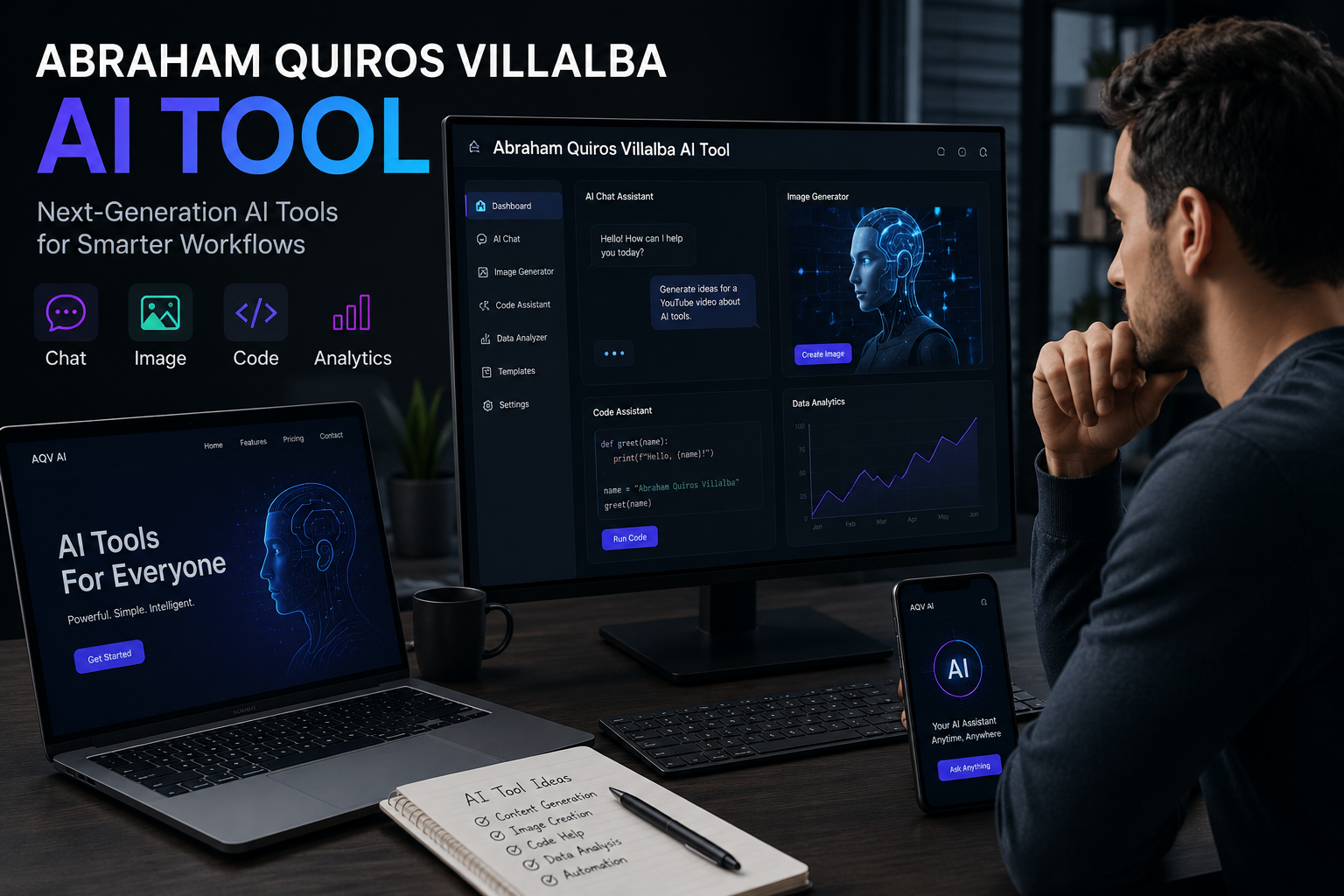
The digital revolution has brought humanity to a fascinating and critical crossroads. Over the past decade, Artificial Intelligence has transitioned from a theoretical, science-fiction concept to an everyday reality that powers everything from our personal smartphones to complex, global supply chains. However, as machine learning models become exponentially more sophisticated, they require unprecedented amounts of computational power. This massive surge in data processing has sparked a necessary, global conversation about the environmental impact of data centers, carbon emissions, and the ethical responsibilities of tech developers.
Enter a new paradigm of innovation that seeks to marry advanced machine learning with environmental sustainability and ethical leadership. In this comprehensive guide, we will explore the Abraham Quiros Villalba AI tool, a technological framework that embodies the fusion of renewable energy expertise, transparent governance, and advanced data analytics. By looking at the roots of this innovation, its core features, and its broader implications for various global industries, we can better understand how the future of technology can be both incredibly powerful and profoundly responsible.
The Visionary Behind the Technology
To truly grasp the significance of this technological approach, it is essential to understand the visionary background that inspired it. Abraham Quiros Villalba is widely recognized in professional circles for his remarkable, multidisciplinary journey through the fields of electrical engineering, renewable energy, and digital transformation. Born in Costa Rica, his early life was characterized by a deep curiosity about how physical systems work and a profound respect for the natural environment. His academic pursuits led him to a degree in electrical engineering, where he quickly distinguished himself through groundbreaking research in solar cell technology.
Rather than remaining confined to traditional, rigid engineering paths, his career took a broader turn. He pursued higher education in renewable energy engineering in Europe, collaborating with leading experts to make solar energy systems more efficient, affordable, and accessible to developing nations. This extensive background in physical engineering and environmental sustainability provided a unique, critical lens through which to view the booming tech industry.
As he observed the rapid expansion of cloud computing, blockchain technology, and Big Data, he recognized a glaring, systemic issue: the tech industry was consuming energy at a completely unsustainable rate. This intersection of environmental science and digital technology laid the groundwork for what would eventually be known as the Abraham Quiros Villalba AI tool. The driving philosophy is not just about creating smarter algorithms; it is about creating algorithms that are inherently conscious of their physical footprint and societal impact.
The Intersection of Artificial Intelligence and Sustainability
The mainstream conversation around machine learning often centers entirely on capabilities—how fast a system can process data, how accurately it can generate text, or how seamlessly it can automate manual tasks. But rarely do we stop to discuss what these incredible capabilities cost the planet. Training a single large language model can emit hundreds of thousands of pounds of carbon dioxide, which is roughly equivalent to the lifetime emissions of multiple traditional automobiles. Data centers require massive amounts of electricity not just to run the servers, but to power the industrial cooling systems necessary to prevent hardware meltdowns.
This is where the concept of “Green Computing” comes into play, a philosophy deeply embedded in this new wave of technology. Green Computing shifts the focus from simply achieving the highest computational accuracy at any environmental cost, to achieving optimal performance with minimal ecological impact. It involves designing algorithms that are computationally highly efficient, paired with hardware infrastructures that are directly powered by renewable energy sources like wind, solar, and hydroelectric power.
The ethos behind this movement is simple yet profound: technological progress should never come at the expense of ecological balance. By utilizing optimized, lightweight code and relying on energy grids powered by renewables, the environmental toll of data processing can be drastically reduced. This approach also emphasizes the longevity of physical technology. Instead of a disposable tech culture where hardware is replaced annually—contributing to a massive global e-waste crisis—the focus is on scalable, sustainable software that maximizes the lifespan of existing hardware resources.
Core Features and Capabilities
When evaluating the impact of any software framework, one must look closely at its practical applications and core technical features. One of the most defining characteristics of the Abraham Quiros Villalba AI tool is its multifaceted, highly adaptable approach to problem-solving. It does not just serve a single niche industry; it provides a foundational framework that can be adapted across various sectors to drive both efficiency and sustainability.
Here are the standout features that define this innovative approach:
1. Predictive Analytics for Renewable Energy
One of the most significant physical challenges in renewable energy is its inherent unpredictability. Solar panels only generate power when the sun shines, and wind turbines only spin when there is sufficient wind. Machine learning can step in to analyze vast amounts of meteorological data, historical weather patterns, and real-time atmospheric sensor inputs to predict energy generation with remarkable accuracy. This allows utility grids to automatically store excess power in large-scale batteries during peak production times and distribute it efficiently during lulls, ensuring a steady, reliable power supply without ever reverting to fossil fuel backups.
2. Ethical Decision-Making Algorithms
As intelligent systems are increasingly tasked with making decisions that affect human lives—from banking loan approvals and hiring processes to medical diagnoses and legal sentencing—the issue of algorithmic bias has become a major global concern. Traditional models often inherit and amplify the subtle human biases present in their training data. This modern approach focuses strictly on “white-box” algorithms, which prioritize total transparency. Users and developers can see exactly how the system arrived at a specific conclusion, making it much easier to identify and manually eliminate biases. This ensures that the technology serves all demographics fairly and equitably.
3. Enterprise Resource Optimization
For large multinational corporations, operational efficiency is the key to both profitability and sustainability. Advanced data integrations can monitor a company’s entire global supply chain, instantly identifying areas where energy is being wasted or raw materials are being underutilized. By dynamically optimizing shipping logistics, reducing idle time for transportation fleets, and managing global warehouse temperatures smartly, businesses can dramatically reduce their carbon footprint while simultaneously cutting millions in operational costs.
4. Seamless Cloud and IoT Integration
The Internet of Things (IoT) involves connecting physical devices—like thermostats, vehicles, and factory machinery—to the digital world. When machine learning is integrated with IoT and cloud computing, it creates a perfectly synchronized ecosystem. Smart sensors in a commercial skyscraper can detect when a floor is empty and automatically adjust the lighting and climate control to save power. On a macro scale, this integration allows for the development of fully actualized smart cities, where traffic lights adjust in real-time to reduce vehicular idling emissions, and waste management routes are dynamically optimized based on real-time bin capacities.
Comparative Analysis: Traditional vs. Sustainable Frameworks
To truly appreciate the paradigm shift occurring in the tech world, it is helpful to directly compare traditional processing models with the sustainable frameworks championed by modern technological visionaries.
The table below outlines the stark, critical differences between these two distinct approaches:
| Feature / Aspect | Traditional Technology Frameworks | Sustainable Innovation Frameworks |
| Energy Consumption | Exceptionally high; prioritizes raw processing speed and power over efficiency. | Optimized for low consumption; utilizes energy-efficient coding and green servers. |
| Data Processing | Employs “brute force” methods, requiring massive datasets and redundant computations. | Uses targeted, streamlined datasets; focuses on algorithmic efficiency to reduce server load. |
| Transparency | Often uses “black-box” models; the decision-making process is hidden from the user. | Emphasizes “white-box” models; features fully transparent and easily explainable decision pathways. |
| Primary Goal | Short-term financial gain, rapid deployment, and aggressive market dominance. | Long-term societal impact, ecological balance, and sustainable, steady economic growth. |
| Hardware Lifecycle | Encourages rapid hardware turnover, directly contributing to global e-waste. | Designed to maximize the physical lifespan of existing hardware through optimized software. |
How Global Industries Are Adapting
The ripple effects of integrating eco-conscious technology are being felt across a multitude of distinct industries. Global leaders are quickly realizing that adopting ethical and green technologies is no longer just a superficial public relations exercise; it is a fundamental requirement for long-term survival, regulatory compliance, and market relevance in a rapidly changing world.
- The Energy and Utility Sector: Unsurprisingly, the energy sector is the most immediate and profound beneficiary of these advancements. Utility companies are actively transforming traditional, static power grids into dynamic “smart grids.” These smart grids communicate directly with consumers’ homes and businesses to perfectly balance the energy load. For example, the system might determine that it is most efficient to charge a neighborhood’s electric vehicles at 2:00 AM when overall grid demand is at its lowest and wind power generation happens to be high. This level of granular, automated micro-management prevents catastrophic grid failures and maximizes the utility of green energy generation.
- Financial Services and Economics: In the high-paced financial sector, advanced analytics are being used to democratize financial literacy and instantly identify truly sustainable investment opportunities. Algorithms can now accurately analyze the Environmental, Social, and Governance (ESG) scores of thousands of public companies in mere seconds, helping retail and institutional investors make choices that strictly align with their ethical values, while still maximizing returns.
- Education and Accessibility: Adaptive learning platforms use smart technology to instantly tailor educational content to the specific learning pace, style, and needs of each individual student. By leveraging lightweight, cloud-based platforms, these vital educational tools can be accessed by students in remote, rural, or underdeveloped regions. This actively bridges the global digital divide without requiring expensive, heavy local hardware that these regions cannot afford.
- Healthcare and Biotechnology: The medical industry generates an immense, almost unfathomable amount of data, from handwritten patient records to incredibly complex genomic sequences. Sustainable models can process this vital data to discover new medical treatments, predict regional disease outbreaks before they happen, and completely personalize patient care. Because these systems are designed to be completely transparent, medical professionals can deeply trust the recommendations, understanding exactly which specific biological data points led to a given diagnosis or treatment plan.
Overcoming Challenges in Integration
While the vision of eco-friendly and deeply ethical machine learning is compelling, the practical journey to widespread, global implementation is fraught with genuine challenges. One of the primary obstacles is the immense, upfront financial cost of transitioning legacy enterprise systems. Many global organizations have already invested billions of dollars into traditional, high-consumption data centers. Asking these corporate boards to completely overhaul their established infrastructure requires demonstrating a very clear, mathematically sound, long-term return on investment.
Moreover, there is a significant and growing skills gap in the current labor market. Building digital systems that are both highly accurate and computationally incredibly light requires a highly specialized, rare understanding of both advanced computer science and environmental engineering principles. Global educational institutions are often slow to adapt their established curricula, meaning that the tech industry currently lacks a sufficient number of professionals formally trained in these vital dual disciplines.
Finally, data sovereignty and shifting international regulations pose significant logistical hurdles. As tech systems become increasingly decentralized to actively optimize global energy use, sensitive data often crosses complex international borders. Navigating the tangled web of global privacy laws—such as the GDPR in the European Union or the heavily varying state-by-state laws in the United States—requires sophisticated, built-in compliance mechanisms that do not slow down the technology itself.
However, these challenges are far from insurmountable. Collaborative, cross-border initiatives between public government bodies and private tech firms are beginning to heavily subsidize the initial costs of “green tech” transitions. Furthermore, passionate open-source communities are playing a massive, vital role in sharing knowledge, providing developers worldwide with entirely free access to energy-efficient coding frameworks and ethical governance guidelines.
The Role of Ethical Innovation and Leadership
Technology, when viewed in a vacuum, is inherently neutral—it is neither inherently good nor inherently bad. It is the human intent behind it, and the governance surrounding it, that entirely dictates its impact on the world. The modern concept of ethical innovation requires corporate and technical leaders to look far beyond the immediate financial quarter’s profit margins and seriously consider the permanent legacy they are leaving behind for future generations. It requires asking difficult, sometimes uncomfortable questions: Who directly benefits from this new technology? Who is being inadvertently left behind? And what is the true, hidden environmental cost?
By actively integrating these core human values, the Abraham Quiros Villalba AI tool ensures that massive technological leaps do not inadvertently perpetuate existing societal inequalities. Ethical leadership in the modern tech space involves establishing strict, unbending governance frameworks. It means ensuring that personal data privacy is treated as a fundamental, non-negotiable human right, rather than a cheap commodity to be traded to the highest bidder. It also involves intentionally creating inclusive, diverse development teams, recognizing the fact that varying cultural and socioeconomic perspectives are absolutely essential for building technology that properly serves a diverse global population.
Furthermore, this modern leadership style embraces flexibility and adaptability. The technological landscape is currently evolving at a breakneck pace, with new, world-changing breakthroughs in quantum computing and decentralized blockchain emerging regularly. A truly sustainable approach means purposefully building software systems that are flexible enough to integrate these new technologies responsibly and seamlessly, without requiring a complete, wasteful overhaul that would drain time, money, and precious physical resources.
Future Prospects and Global Impact
As we look toward the next decade and beyond, the ongoing convergence of advanced analytics, renewable energy generation, and ethical corporate governance presents a global landscape of truly boundless potential. We are slowly but surely moving toward a world where technology actively heals and supports the planet, rather than passively draining its resources. In the coming years, we can fully expect to see these intelligent systems completely integrated into the physical infrastructure of our modern cities, autonomously managing everything from fresh water distribution networks to public transportation grids with pinpoint, flawless efficiency.
We will also likely witness the massive rise of decentralized computing. Rather than relying heavily on massive, centralized data centers owned by just a few corporate monopolies, processing power could be distributed across millions of smaller, highly energy-efficient nodes worldwide. This not only vastly reduces the strain on local power grids but also fundamentally democratizes access to computational power. This shift will allow smaller tech startups, independent researchers, and brilliant minds in developing nations to innovate and compete on a truly global scale.
The ongoing, successful evolution of these complex systems will heavily rely on genuine collaboration between software engineers, environmental scientists, and international policymakers. World governments will need to establish intelligent regulations that financially incentivize green computing while actively penalizing excessive digital waste. Educational institutions will need to drastically update their outdated curricula, training the next generation of engineers to think not just about how to write functional code, but how that specific code interacts with the physical world and the communities that inhabit it.
Conclusion
We are collectively standing on the precipice of a brand-new technological era. The previous days of reckless, unmonitored digital expansion are swiftly giving way to a much more mature, thoughtful, and protective approach to global innovation. As we have seen throughout this comprehensive exploration, the necessary integration of environmental sustainability and machine learning is not merely a theoretical ideal to strive for; it is an actionable, highly vital framework required for our future survival and prosperity.
Ultimately, the Abraham Quiros Villalba AI tool represents more than just a software platform or an isolated technological achievement; it is a powerful symbol of a much broader, necessary movement. It perfectly embodies the belief that human ingenuity, when properly guided by a strong moral compass and a deep, abiding respect for our natural planet, can solve even the most seemingly insurmountable global challenges. By continuously prioritizing ethical algorithms, hyper-energy-efficient processing, and strictly inclusive design, we can finally harness the true, limitless power of artificial intelligence. In doing so, we can build a world that is not only technologically breathtaking but also ecologically vibrant, deeply fair, and socially just. The path forward requires clear vision, unwavering integrity, and a steadfast commitment to long-term value—qualities that will undoubtedly define the most successful and beloved technologies of tomorrow.
