

Have you ever watched a toddler try to figure out a new toy? They don’t sit back and read a manual. They drop it, bang it against the floor, turn it upside down, and stick it in their mouth. They are completely immersed, learning through direct, physical trial and error.
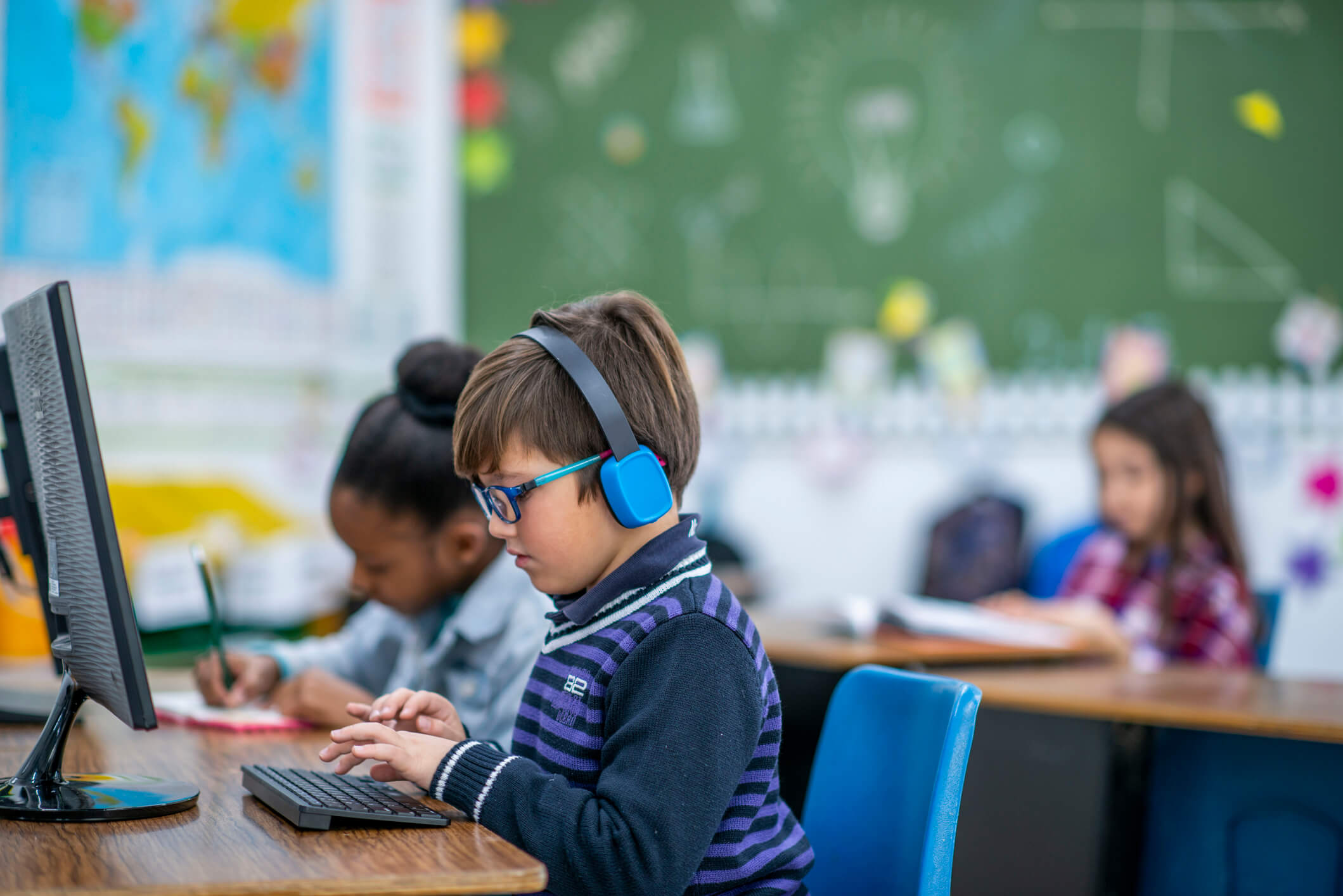
Somewhere along the way to school age, however, learning often shifts from this vibrant, hands-on exploration to a passive experience. Children are expected to sit still, listen to a lecture, copy notes from a whiteboard, and memorize facts for a Friday quiz. While traditional schooling has its place, cognitive science tells us that the human brain expands and retains information best when it is actively engaged.
If you are looking to spark a deeper love for discovery in your household, this complete active learning guide fparentips will help you transform daily routines into engaging, mind-building adventures. Let’s explore how you can move your child from a passive observer to an active participant in their own education.
Understanding Active Learning
Before diving into daily strategies, it is helpful to understand what active learning actually looks like. In simple terms, it is the process of learning by doing, thinking, and reflecting, rather than just absorbing information.
When a child reads a chapter in a history book, they are using passive learning. If they read that same chapter and then build a miniature cardboard replica of a historical castle, or debate the choices of a historical figure at the dinner table, they are using active learning.
The Cognitive Benefits
When children engage with material through multiple senses and actions, several remarkable things happen in their brains:
- Stronger Neural Pathways: Active exploration forces the brain to connect new data with existing knowledge, building sturdier mental scaffolding.
- Higher-Order Thinking: Instead of just remembering a fact, children learn to analyze, evaluate, and create—the top tiers of educational frameworks like Bloom’s Taxonomy.
- Increased Dopamine Release: Solving a physical puzzle or discovering an answer firsthand triggers the brain’s reward center, making the process inherently enjoyable.
Active vs. Passive Learning: The Daily Contrast
To see how this plays out at home, let’s look at how common daily scenarios can be approached. The table below contrasts the passive approach with an active, discovery-driven approach.
| Scenario | Passive Approach | Active Approach |
| Reading a Book | Reading the words aloud while the child listens silently until the story ends. | Stopping to ask, “What do you think will happen next?” or having them act out the characters’ expressions. |
| Exploring Nature | Pointing at a tree and saying, “That is an oak tree. Look at its leaves.” | Handing the child a magnifying glass and asking, “How is this leaf different from the one we found yesterday?” |
| Doing Math Homework | Memorizing multiplication flashcards through rapid, repetitive recitation. | Using LEGO bricks or counting apples to build physical groups and visually see how multiplication works. |
| Watching a Show | Leaving the television on as background noise or a distraction while cooking dinner. | Watching together and discussing the conflict: “Why do you think those two characters are arguing?” |
Core Strategies to Implement at Home
You don’t need a teaching degree or an expensive classroom setup to bring active learning into your home. You just need a shift in perspective. Here are the most effective strategies to get started.
1. Shift from Answering to Questioning
As parents, our instinct is to provide answers. When a child asks, “Why is the sky blue?” or “How do birds fly?”, we want to give them the scientific explanation immediately.
To foster an active mindset, turn the question back to them. Try saying, “That is an incredible question. What do you think the reason is?”
This forces them to pause, search their existing knowledge, and formulate a hypothesis. Even if their guess is wildly incorrect (e.g., “Maybe the sky is blue because it reflects the ocean!”), they are actively theorizing. You can then research the answer together, turning a fleeting question into a shared mini-investigation.
2. Gamify Daily Routines
Turn ordinary chores and habits into cognitive challenges.
- Grocery Store Math: Hand your child the grocery list and a calculator. Have them estimate the total cost of the items in the cart or calculate the best price per ounce between two brands of cereal.
- Kitchen Chemistry: Cooking is pure science. Discuss how baking powder makes a cake rise, watch physical states change as ice melts into water or water boils into steam, and explore how salt changes the flavor profile of a dish.
- Laundry Sorting: For younger children, sorting laundry by color, size, or family member is an excellent, tactile introduction to categorization and data classification.
3. Embrace the “Teach-Back” Method
One of the absolute best ways to confirm a child understands something is to ask them to teach it to you. If your child just learned about the solar system at school, don’t just ask, “What did you do today?” Instead, say, “I always forget the order of the planets. Can you teach me a trick to remember them?”
When a child takes on the role of the educator, they have to organize their thoughts, simplify complex concepts, and articulate them clearly. It builds immense confidence and cements the information in their memory.
Overcoming Obstacles: Mess, Mistakes, and Patience
If active learning is so wonderful, why isn’t every home filled with it constantly? Because, quite frankly, it can be messy, loud, and time-consuming.
Passive learning is neat. A child sitting in front of a workbook creates no mess. Active learning, however, might involve baking soda volcanoes overflowing onto kitchen towels, living rooms turned into blanket forts to learn about architecture, or muddy shoes from an outdoor insect safari.
Redefining Mistakes
In a passive environment, mistakes are often penalized with a red pen or a lower score. In an active learning setup, mistakes are considered essential data points.
If a tower of blocks falls over, it isn’t a failure; it’s an opportunity to ask, “Why did it tip that way? What can we change about the base next time to make it sturdier?” When children realize that mistakes are just part of the discovery loop, their fear of failure vanishes, replaced by resilience and curiosity.
Age-Appropriate Frameworks
As your child grows, their capacity for abstract thought and independent exploration changes. Tailoring your approach ensures they stay challenged without feeling overwhelmed.
Toddlers and Preschoolers (Ages 2–5)
At this stage, the focus should be almost entirely on sensory and physical engagement.
- Sensory Bins: Fill a plastic tub with rice, beans, or water, and hide small toys inside. Let them scoop, pour, and sort.
- Story Tracking: Read books with repetitive phrases and let them fill in the blanks, or have them point to specific objects hidden in the illustrations.
Elementary Schoolers (Ages 6–11)
Children in this bracket are developing logic and can handle multi-step activities.
- DIY Makerspaces: Keep a bin filled with recycled materials—cardboard boxes, plastic bottle caps, rubber bands, and tape. Challenge them to build a marble run or a bridge that can support the weight of a toy car.
- Family Board Games: Games like Monopoly, Settlers of Catan, or even simple card games teach strategy, probability, negotiation, and critical thinking.
Tweens and Teens (Ages 12+)
Older kids need autonomy and real-world relevance to stay engaged.
- Project-Based Budgets: If they want to redecorate their bedroom or plan a weekend outing with friends, give them a fixed budget. Let them research costs, compare options, map out schedules, and execute the plan entirely on their own.
- Debate Nights: Pick a non-controversial, lighthearted topic (e.g., “Should pineapples be allowed on pizza?” or “Who is the ultimate superhero?”). Have everyone research arguments, present evidence, and practice respectful debate over dinner.
Conclusion
At its core, utilizing this active learning guide fparentips is about moving away from the idea that education only happens when a child is staring at a book or a screen. True education happens when a child is encouraged to touch, question, dismantle, rebuild, and reflect.
By making small tweaks to your daily conversations, encouraging independence, and viewing mistakes as experiments, you can cultivate an environment where learning is not viewed as a chore, but as a lifelong adventure. The messy kitchens and extra questions are a small price to pay for raising a deeply curious, resilient, and independent thinker.
